Internal seminar: Is recycling a kind of nonument-related activity? Reading Elizabeth Benjamin’s “Monuments and ‘nonuments’: a typology of the forgotten memoryscape”
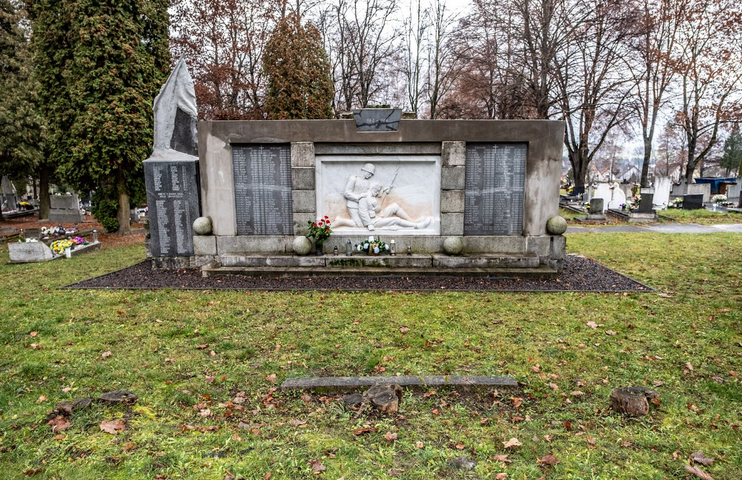
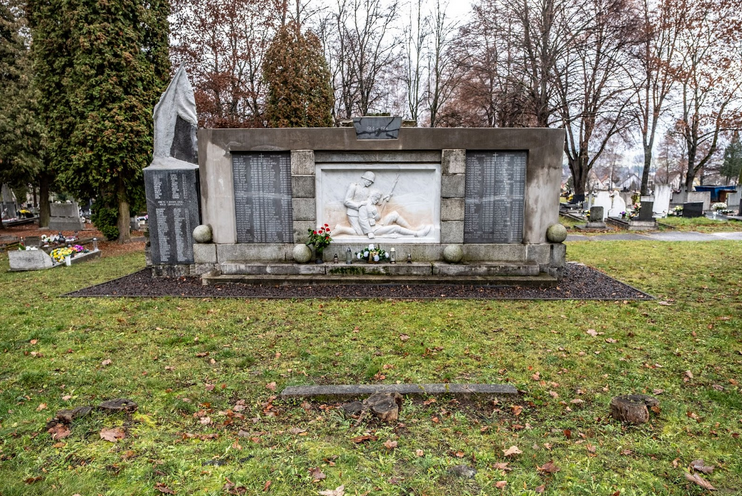
A memorial to the inhabitants of Handlová who fell in the First World War (the town was then known also as Krickerhau), photo by Michal Korhel/Pomnik upamiętniający mieszkańców Handlovej poległych podczas I wojny światowej (miasto było wówczas znane również jako Krickerhau), fot. Michal Korhel
In the last seminar of 2025, we read and discussed a text by Elizabeth Benjamin from Coventry University, introducing the distinct category of nonuments. Drawing on her research in France, Benjamin constructs a typology of nonuments, that is, contested monuments that vary in the degree to which they are preserved.
We devoted a substantial amount of time to engaging with Benjamin’s proposal and to considering how her typology addresses questions of recycling, which are also central to our own research. This discussion formed part of our broader effort to refine a working definition of recycling.
During the seminar, we also reflected on the kinds of nonuments that might be found within our own fieldwork. Each of us selected and presented an example of a nonument encountered in their research, which we would now like to share with you.
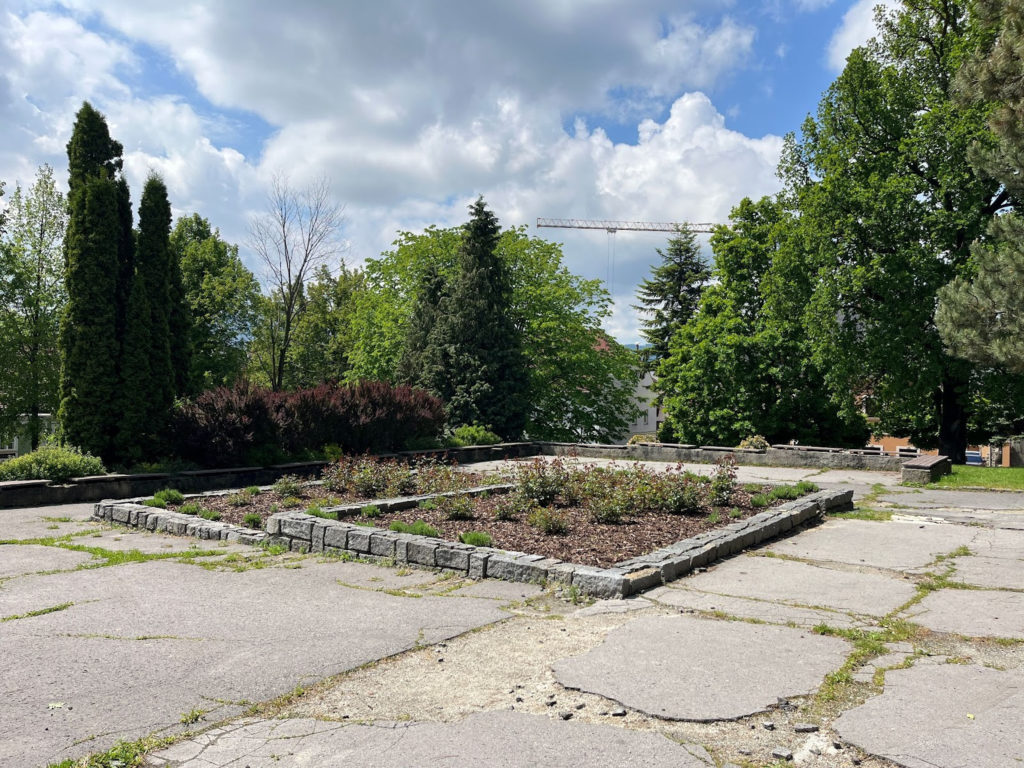
Magdalena: The photograph shows the site of the former Protestant church in Liberec, formerly German Reichenberg, surrounded by trees, with benches and a low wall covered in shrubs in the centre, which may symbolise the front of the church. Today, there is a park and a children’s playground on this site. This would be a ‘ruined’ nonument.
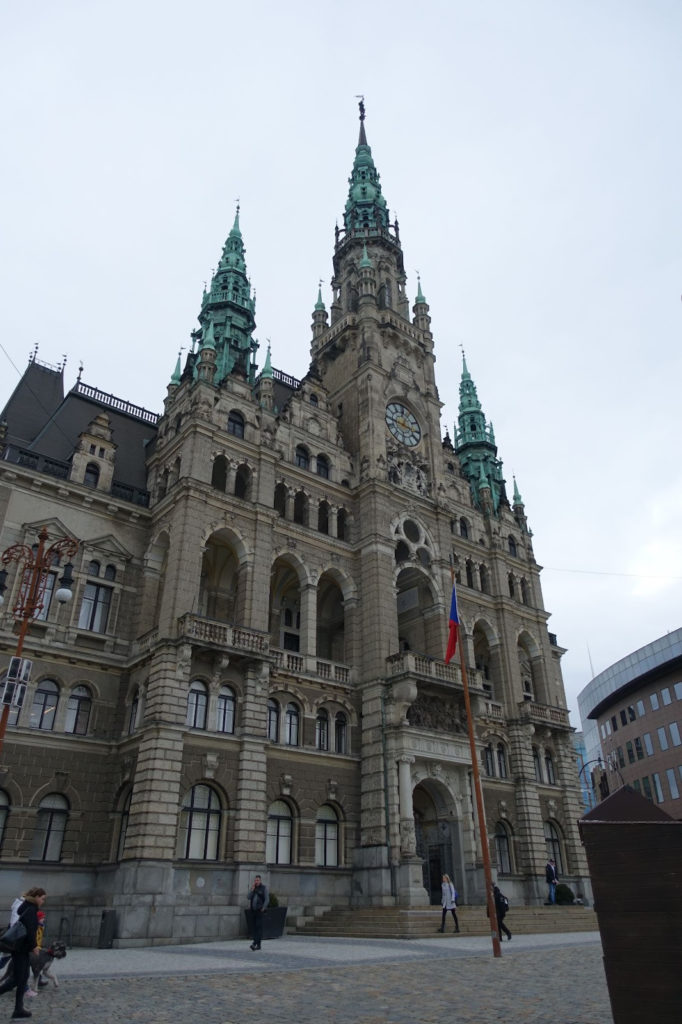
Karina: The town hall in Liberec, formerly German Reichenberg, was built in the 1880s to symbolize the economic power of Bohemian Germans in the rising industrial center. The architecture imitates the Saxon Renaissance style to emphasize further the German character of the building, the city, and the region. The town hall, like all municipal institutions, began to be used by the new, ethnically Czech city administration. According to Benjamin, one type of nonuments is ‘reframed,’ that is, when the original structure remains, but the purpose or meaning changes. In this respect, all monuments in post-displacement regions can be considered nonuments, as the cultural and political shift was so radical that it shook the meaning of all public institutions.
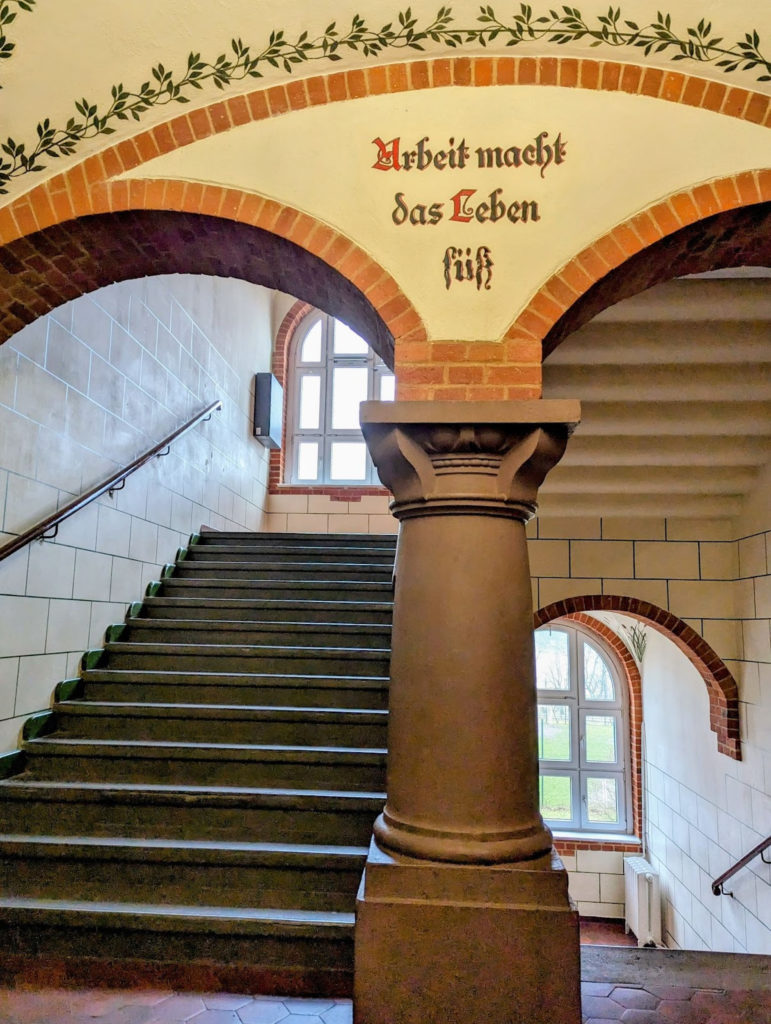
Karolina: Sometimes nonuments can be found indoors, such as this pillar with a German inscription in one of the schools in Wałcz, formerly the German town of Deutsch Krone. It was customary to place such inscriptions in schools to encourage pupils to behave in accordance with the social norms of the time. This particular inscription praises work as the highest value. After 1945, the inscription was covered with paint. More recently, it has been renovated and ‘reframed,’ as one of the examples of nonuments is called, not as a symbol of German hostility, but as part of the town’s multilayered heritage.
Michal: It is a memorial to the inhabitants of Handlová who fell in the First World War (the town was then known also as Krickerhau). It was erected in 1923 on the town square in Handlová, from where it was removed in the mid-1950s. Allegedly destroyed, it lay in the local cemetery until the second half of the 1960s, when a new monument was erected there—the Memorial to the Victims of the Handlová Strike of 1918 and the Victims of the Second World War. The damaged First World War memorial was then “attached” to the back of this new monument, which fulfills several categories of nonuments: rejected, removed, repurposed, or rebuilt.