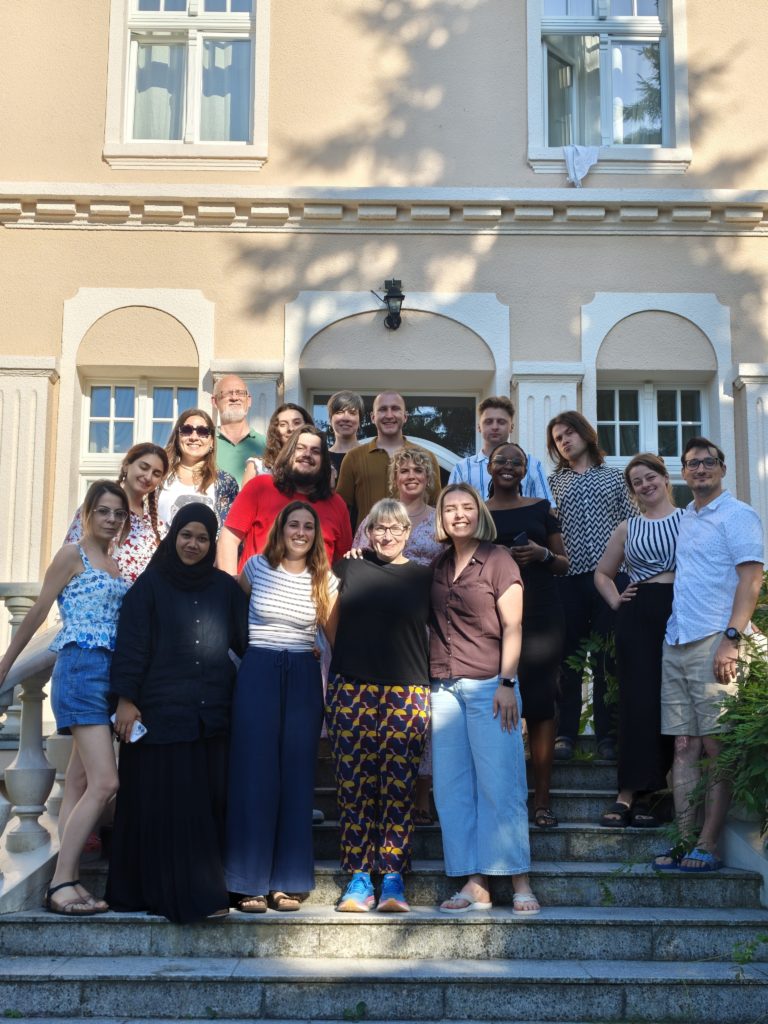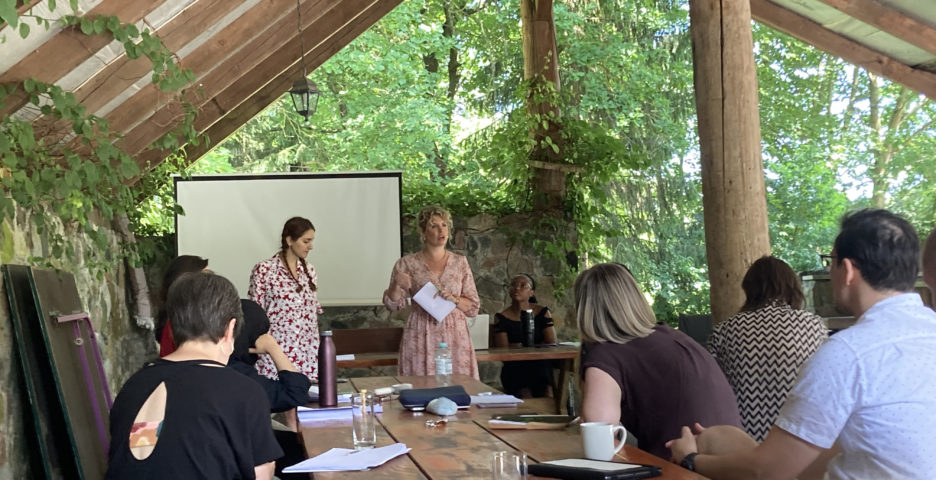
From 26 June to 1 July, Magdalena participated in the international summer school “Recording & Transformation,” organized by the Anthropos Doctoral School and the Tadeusz Manteuffel Institute of History of Polish Academy of Sciences in collaboration with the University of Liverpool, Leipzig University, and the Leibniz Institute for the History and Culture of Eastern Europe (GWZO). The summer school took place in the picturesque village of Pozorty in the Masuria region, right by a lake. After intensive days filled with lectures and workshops, participants enjoyed relaxing by the water – especially as the exceptionally hot weather made the lakeside setting particularly welcome.
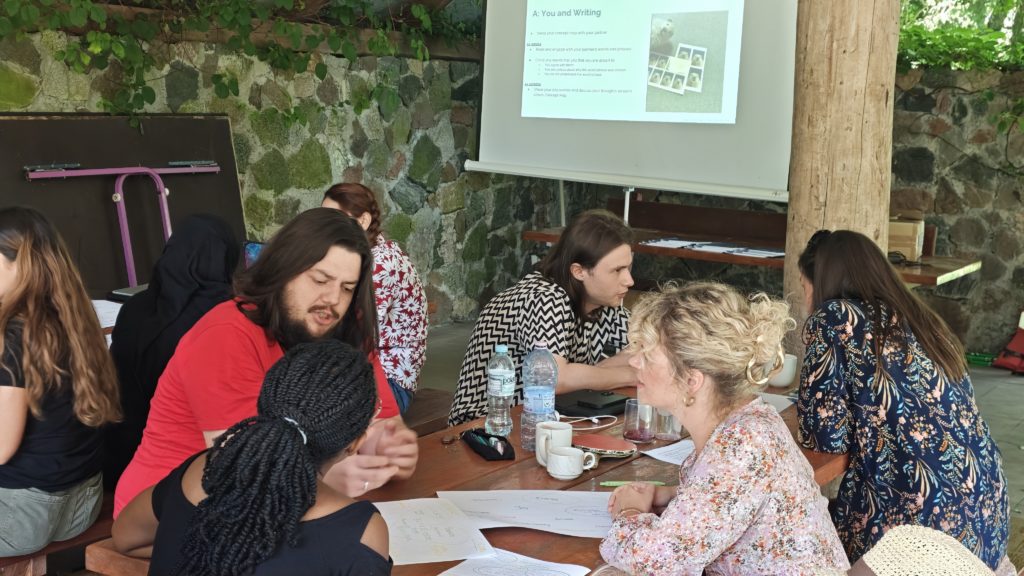
The program featured lectures, workshops, and practical sessions led by distinguished scholars from various academic institutions: Prof. Harald Braun (Liverpool), Prof. Megan Maruschke (Leipzig), Dr. Nuala Caomhanach (Graduate Institute, Geneva), Dr. Izabela Mrzygłód (DHI, IH PAN) & Dr. Zachary Mazur (POLIN, IH PAN). Together with an international group of doctoral researchers, participants discussed contemporary archival studies, transformations of archives, and the role of archives during periods of social and political change.
Magdalena was part of the group that prepared a presentation and discussion on Michelle Caswell and Marika Cifor’s article From Human Rights to Feminist Ethics: Radical Empathy in the Archives (2016). The discussion focused on the concept of radical empathy in archival and research practice. Magdalena sees this approach as highly relevant to her own doctoral research, as her project explores the relationships between the researcher, archives, archivists, and interviewees, who not only contribute source material but also actively participate in the creation of historical narratives. Another important component of the program consisted of workshops designed to develop participants’ presentation skills, including Elevator Pitches and Public Speaking & Job Talks. For Magdalena, the summer school was not only an opportunity to acquire new skills but also to refine and further develop the key arguments of her doctoral dissertation.
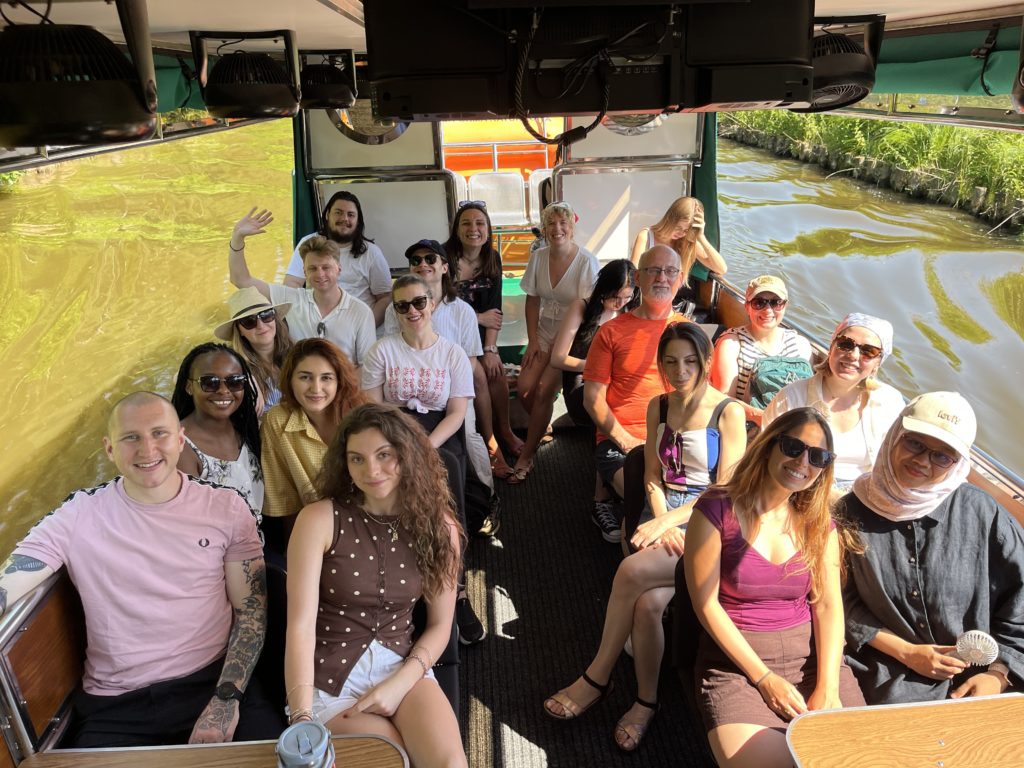
The organizers also included a field excursion in the program. Participants took a boat trip along the Elbląg Canal, where they learned about one of Europe’s most remarkable achievements in hydraulic engineering. Particular attention was devoted to the canal’s unique inclined-plane system, which allows boats to travel over land on specially designed rail-mounted carriages. Invented in the nineteenth century by Prussian Georg Jacob Steenke, this engineering solution also serves as a reminder of the region’s multicultural past, when much of Masuria was inhabited by German-speaking communities. In this way, the summer school successfully combined theoretical reflection on archives and memory with the direct experience of a landscape that itself bears witness to historical transformations.