
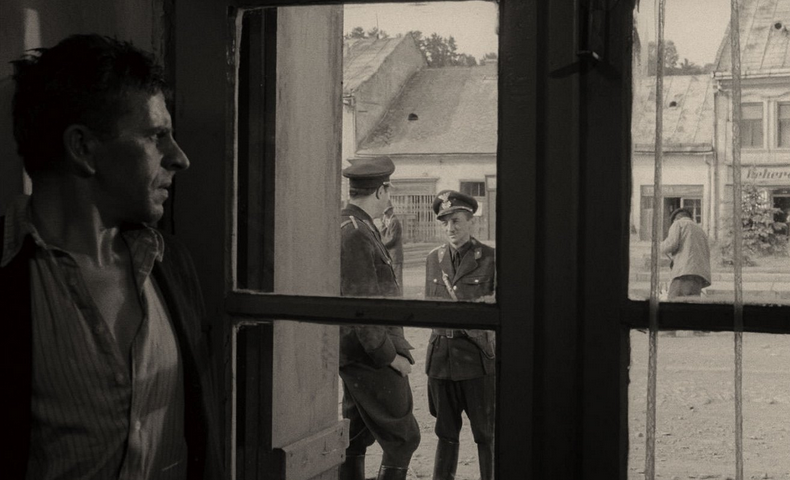
This was not our first encounter with Slovak cinema in our seminars. Some time last year, we discussed Mŕtvi nespievajú, a film by Andrej Lettrich depicting the realities of Slovak troops on the Eastern Front vis-à-vis their families at home. This time, we decided to delve into a solid classic: the first Czechoslovak Oscar-winning film, Obchod na korze [The Shop on Main Street] (1965).
The story, based on a book by Jiří Grossmann and directed by the iconic duo Ján Kadár and Elmar Klos, depicts the entangled lives of the inhabitants of a small Slovak town. The film also has a Polish accent, as the Jewish shop owner is played by Ida Kamińska, a distinguished Polish-Jewish actress.
We discussed the specific wartime trajectory of Slovakia, a topic we had also touched upon while watching Mŕtvi nespievajú. In particular, we focused on attitudes toward the local fascist regime, the apparent idyll of occupation, and the ways in which various symbols in the film can be interpreted as excuses for collaboration. We also devoted attention to the film’s production context and to the striking absence of Germans on screen—while it is Slovaks who carry out the forced displacement of the town’s Jewish population.
Altogether, this helped us broaden our analytical horizon and reflect on questions such as how post-conflict societies deal with their pasts. After all, the war ended, yet the Slovak inhabitants of the town depicted in the film continued to live on without their Jewish neighbors.